JD.com Logistics · Experimentation
AirPaths: Drone Delivery in Urban Contexts
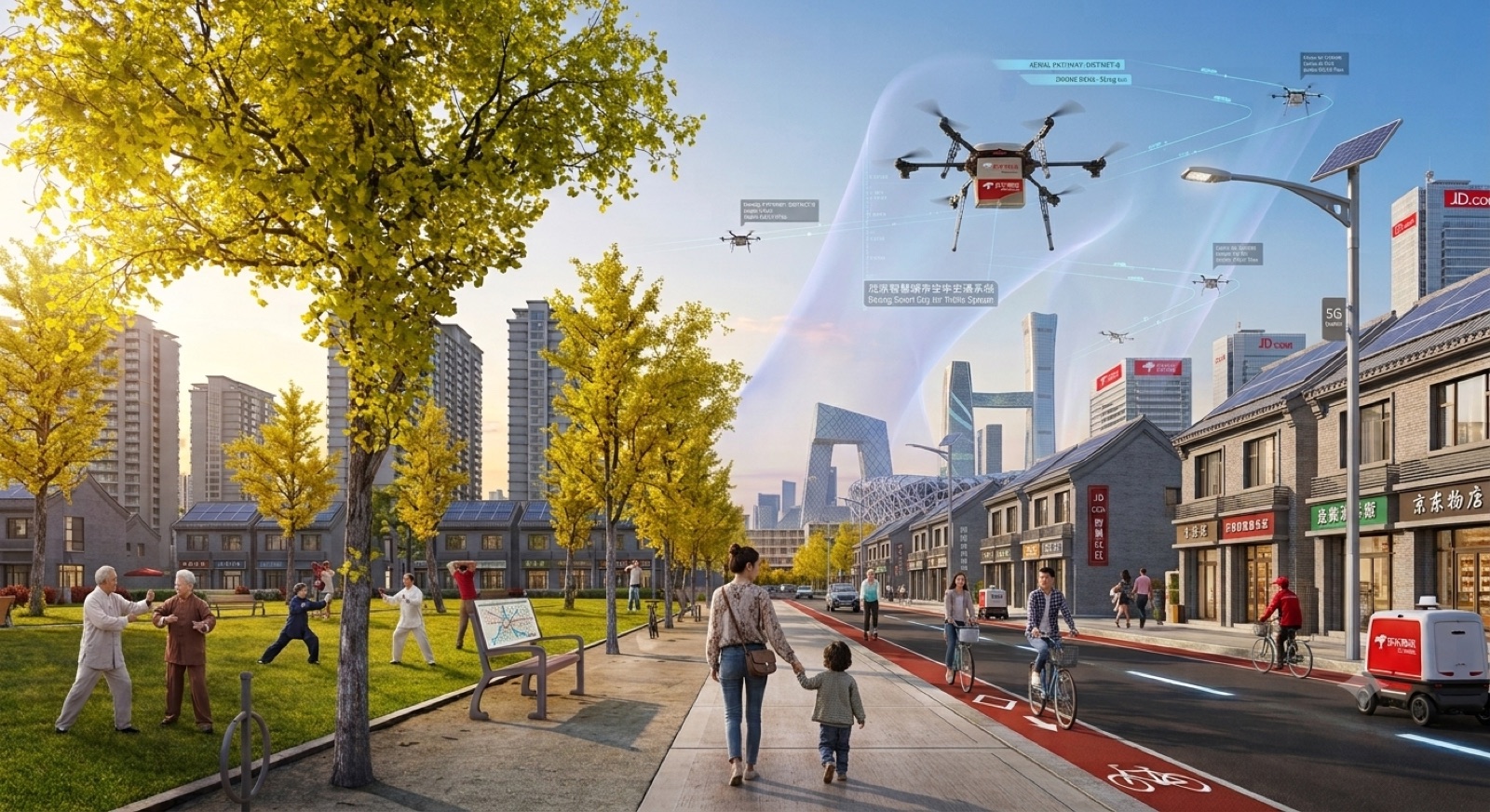
Overview
What could drone delivery do in the city, not just the countryside?
JD.com built drone delivery to reach China's countryside. The harder question was what the same technology could do in dense cities, where last-mile delivery is slowest and most expensive. AirPaths explored those urban use cases.
Facts & Figures
What the exploration produced.
- 6 future concept directions for urban drone delivery: above-building hubs, vertical sky postcodes, neighborhood drop-offs, among others.
- 3 business cases pressure-tested on desirability, viability and feasibility, delivered to the innovation leads.
Context & Constraints
JD.com's drones reached the countryside. The city was the harder question.
JD.com is a Chinese technology-driven e-commerce company and the country's largest retailer by revenue, serving over 600 million users. Its drone-delivery program was launched to reach rural areas. JD.com needed help exploring potential use cases for the emerging technology in urban epicenters: faster last-mile delivery, lower costs and wider access.
0 → 1 Design Approach
Trend research and workshops, pressure-tested against desirability, viability and feasibility.
Creative exploration through trend research and imagination and ideation workshops, to push the boundaries of what is possible. Each concept was assessed through a staggered framework: desirability (customers' willingness to adopt), viability (cost reduction, technological readiness) and feasibility (urban safety constraints, traffic-control policy).
Concept directions
Ways drone delivery could land in the dense city.
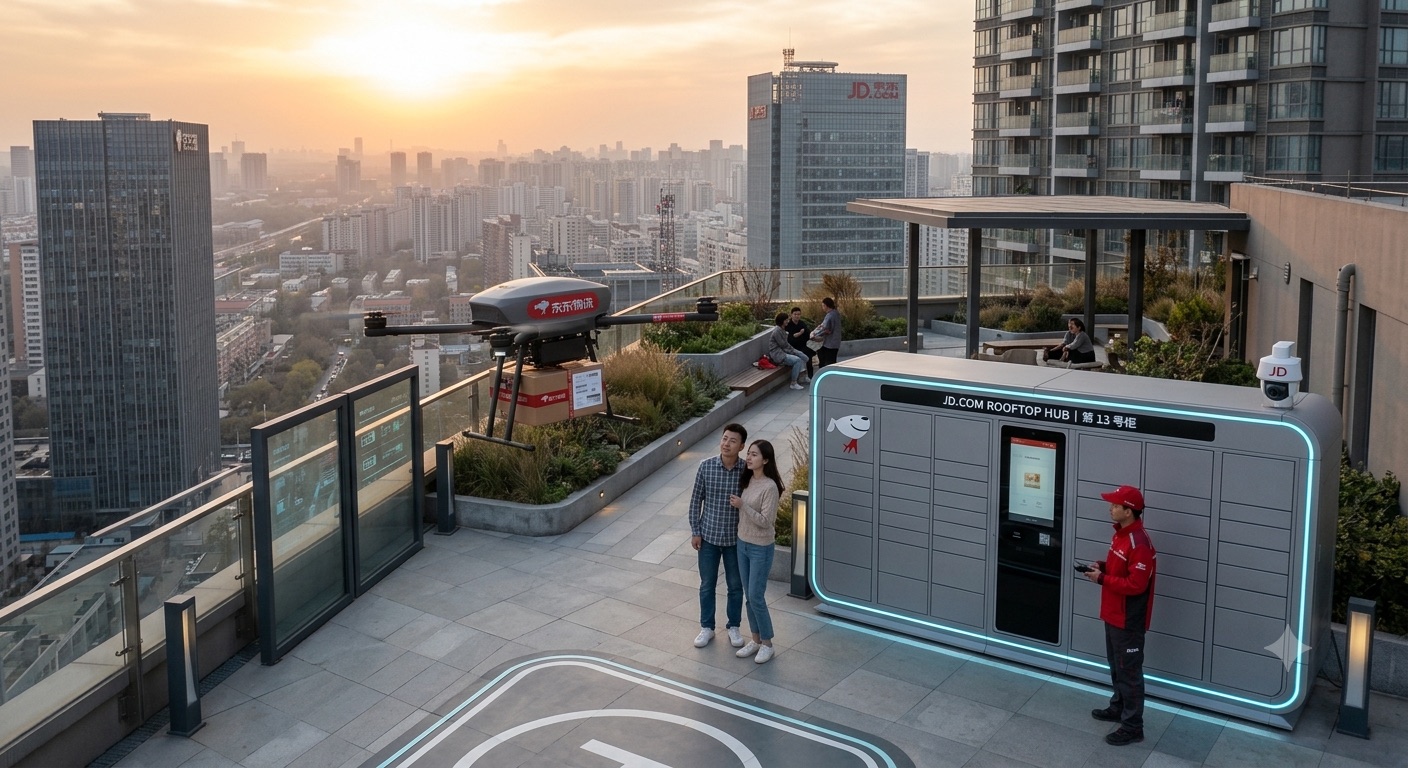
Above-building hubs. Rooftop terminals where drones land and residents collect.
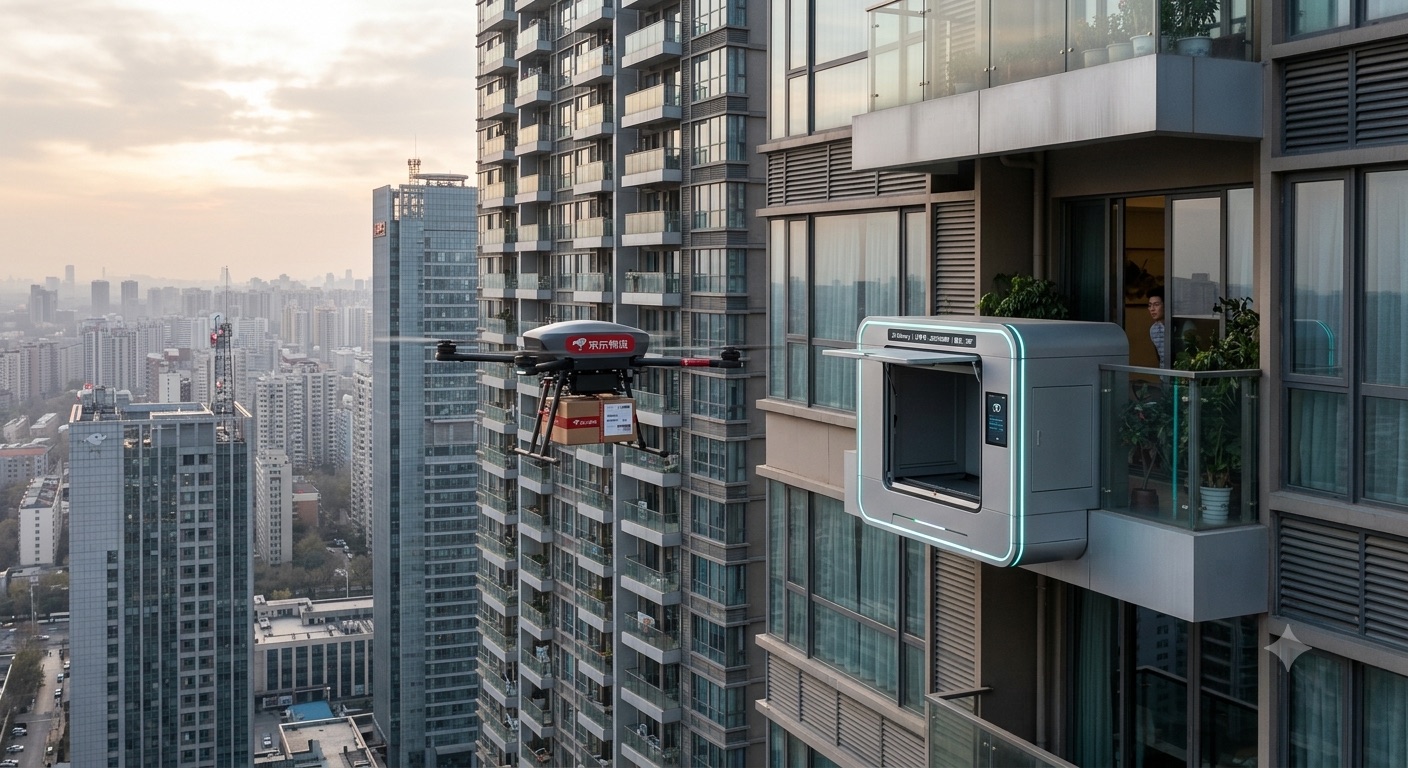
Vertical sky postcodes. A wall-mounted receiver brings parcels straight to the balcony.
Outcome
A map of how JD.com could take drones into the city.
A range of future concepts for urban drone delivery, including above-building hubs, vertical "sky postcodes" for receiving packages, and neighborhood drop-off points for the last mile. Each was pressure-tested against desirability, viability and feasibility, mapping how JD.com could extend its rural drone program into the city: faster and cheaper, without adding to street-level traffic.
Not long after, the future arrived faster than expected. During the COVID-19 pandemic in China, drone delivery rapidly evolved from an experimental concept into a vital, contactless urban logistics tool, bypassing lockdown restrictions, reducing human-to-human contact, and transporting urgent medical supplies, exactly the kind of urban use cases this exploration set out to imagine. World Economic Forum ↗