IKEA × Circular Innovation · 0 → 1 product development
Second-hand Marketplace
Overview
In a crowded market, how could IKEA own the second-hand experience of its own furniture?
Second-hand was the flagship of a broader circular-innovation exploration at IKEA that also included Digital Wallet, Rental and maintenance services. It was the one that led, and the others grew out of it, so the story here sits inside that wider push to extend the life of IKEA’s products and keep the brand relevant in a circular economy.
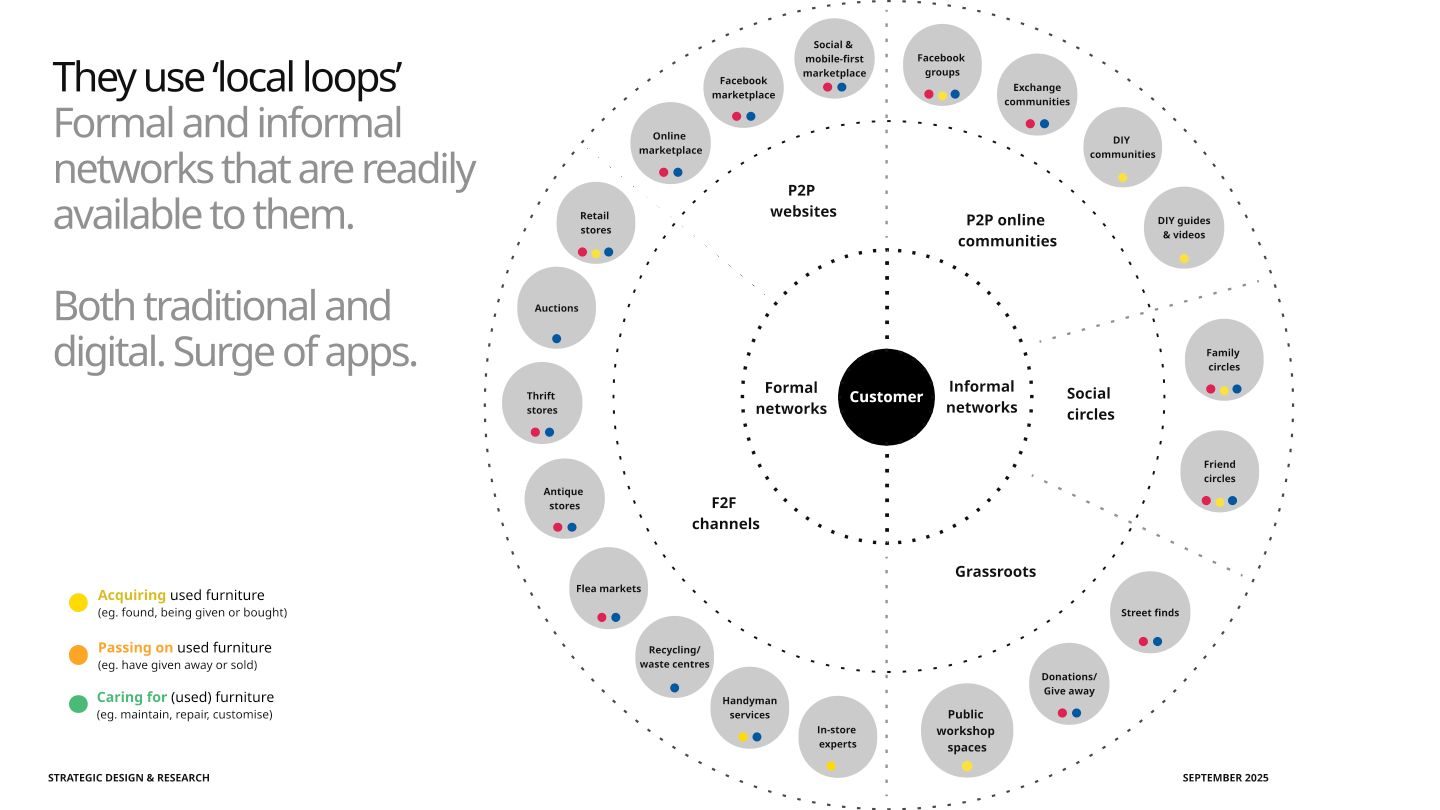
The second-hand economy is being digitized and growing fast, and a new generation of customers is thinking second-hand first. IKEA products are already traded on these platforms, but the brand isn't part of it yet. People already pass on, acquire and care for belongings through a rich web of local loops: thrift stores, online marketplaces, family hand-me-downs and repair cafés, where IKEA would be just one node among many.
Facts & Figures
From a supervisory board question to a live second-hand marketplace.
- 1 web and app platform to sell, buy and care for second-hand IKEA furniture.
- 3.6M website views and 75,000 active buyers and sellers.
- Live in 6 countries at secondhand.ikea.com, piloted in Madrid and Oslo (mid-2024).
- 12 markets in the program to define the marketplace's USP; Norway, Spain and France prioritized.
- €4M business case secured for further development, added to IKEA’s FY25 innovation pipeline.
- 74% customer engagement, 87% brand alignment, and 20% new IKEA Family members in validation.
- Validation cut from 12 to 4 weeks, and design delivery from 24 to 12 weeks.
- 2 Cannes Lions: Silver and Bronze.
Context & Constraints
Not another second-hand marketplace, a uniquely IKEA one.
The supervisory board asked whether IKEA could ever deliver a peer-to-peer second-hand marketplace to reach its circular-strategy ambitions. The numbers made the case: the second-hand home-furnishings market is worth over €60bn and recommerce is growing twice as fast as traditional retail, with IKEA products already making up around 10% of used-furnishing sales. 62% of Gen Z and Millennials now think second-hand first, and 67% of customers are more likely to buy from a retailer that offers resale.
The opportunity was to reach 150M+ new customers with a more affordable, sustainable option; the risk, losing 6–18% of the customer base if IKEA weren't seen as a leading sustainable brand. So the short answer was yes, but only after reframing the question: not "build another cookie-cutter marketplace in an already crowded space," but "how can IKEA differentiate the peer-to-peer experience of IKEA furniture, and capture market share and long-term relevance?"
0 → 1 Design Approach
Researching second-hand exchanges in local loops, finding experience differentiators to design for.
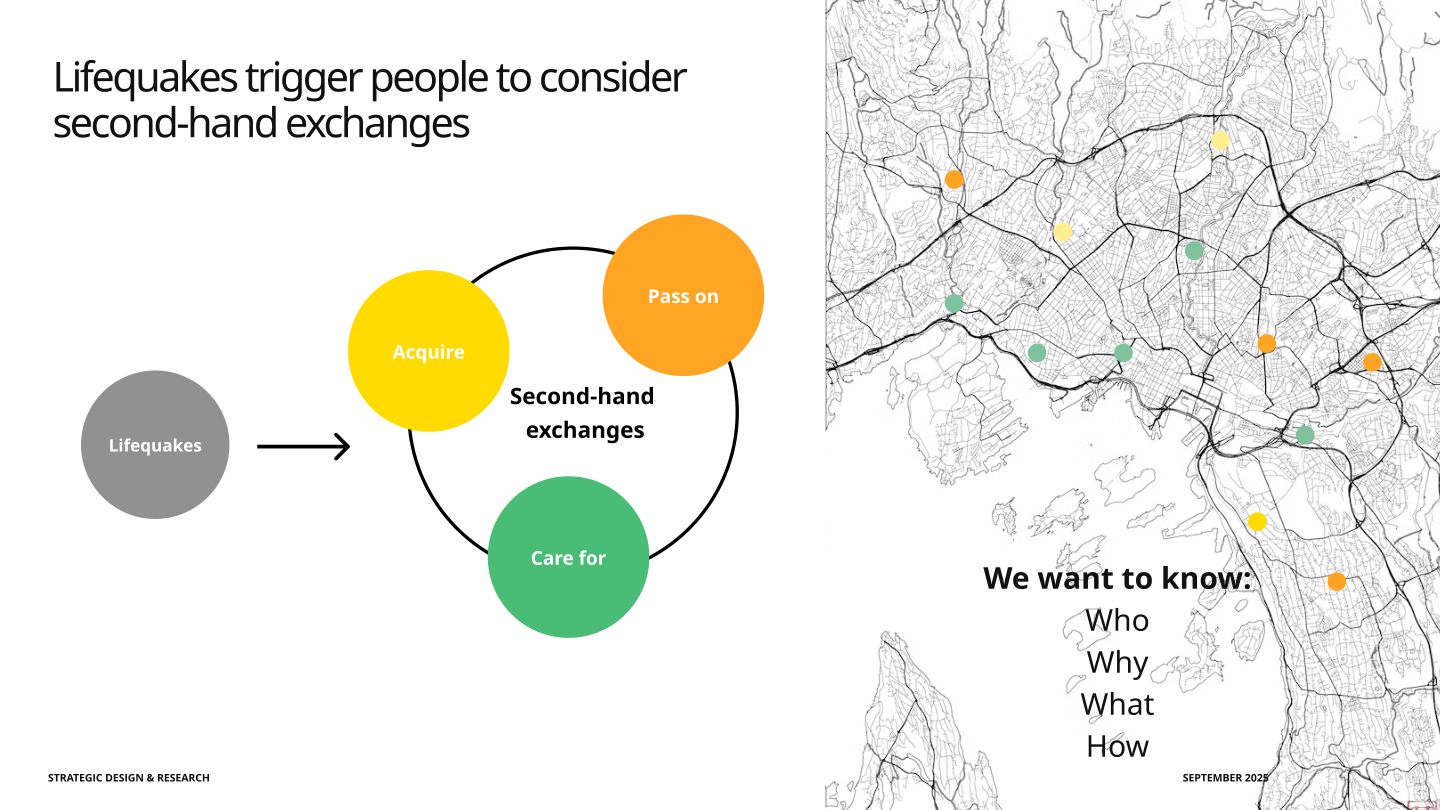
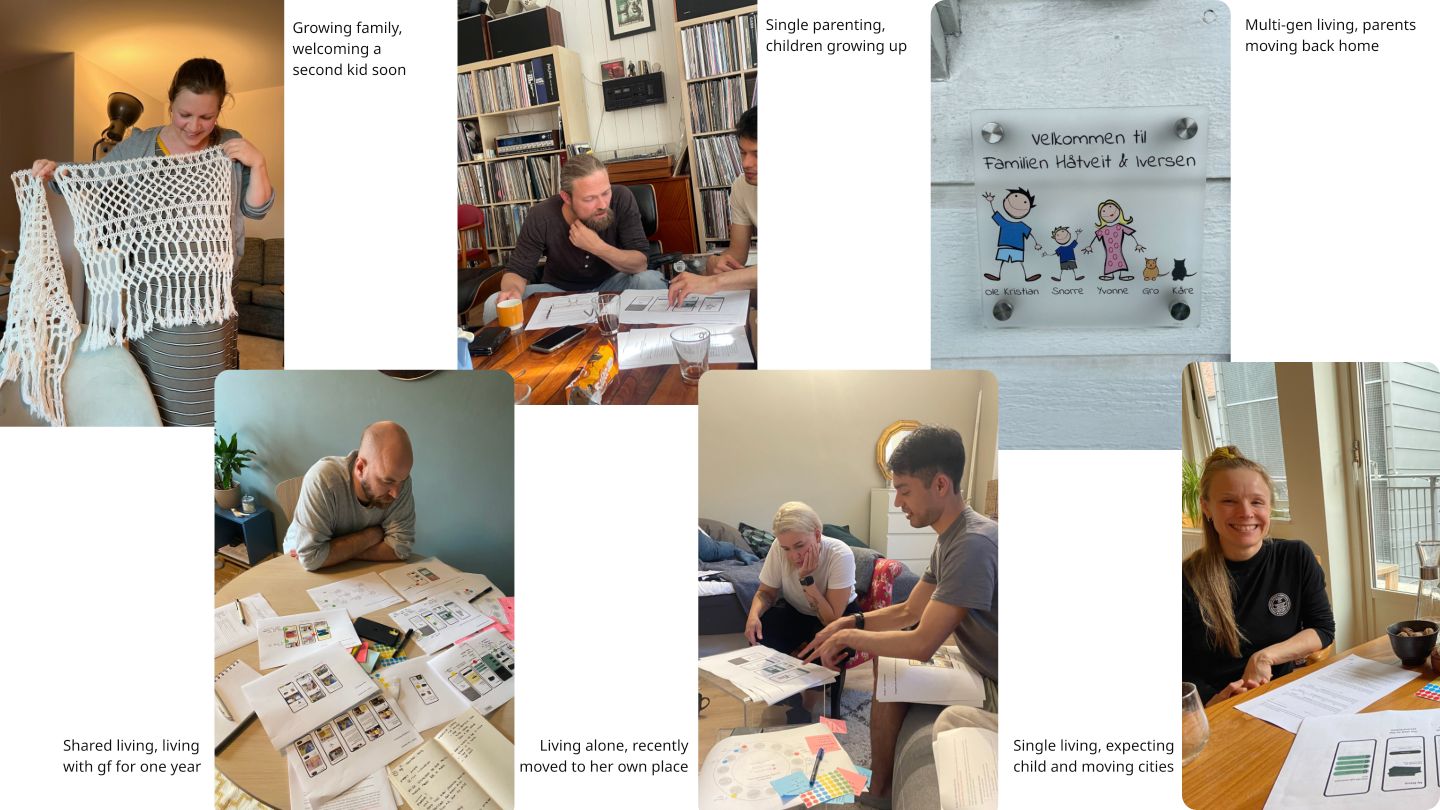
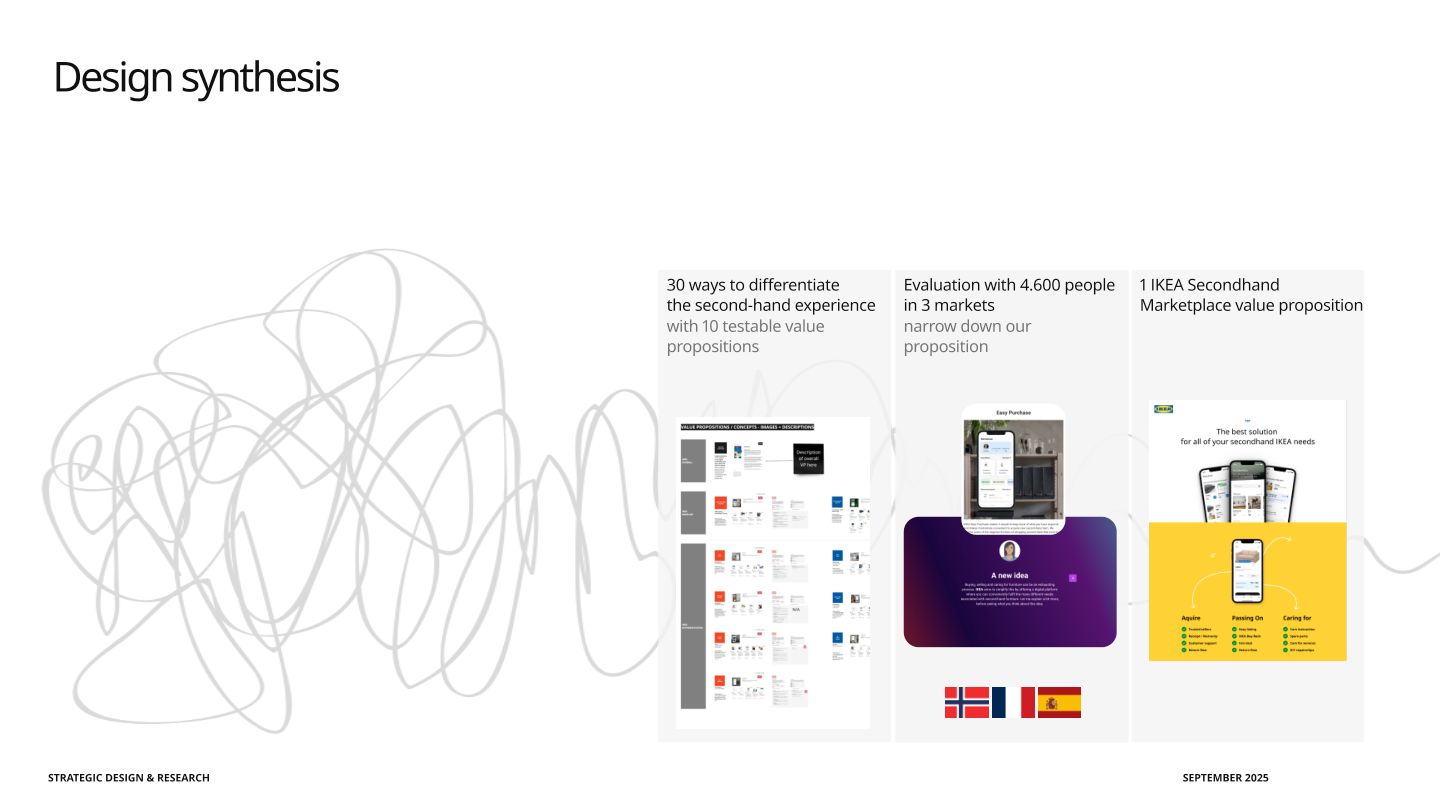
0 → 1 product development through a design-led innovation process. The team started with exploration: market, ethnographic and customer research across 12 markets, mapping how people already acquire, care for and pass on belongings through their local loops, and finding the elements of the experience worth differentiating on. From there we moved through ideation, concept exploration and validation with 4,500 customers in 3 markets, to define the overall design direction, the experience design strategy, value proposition, and product development roadmap.
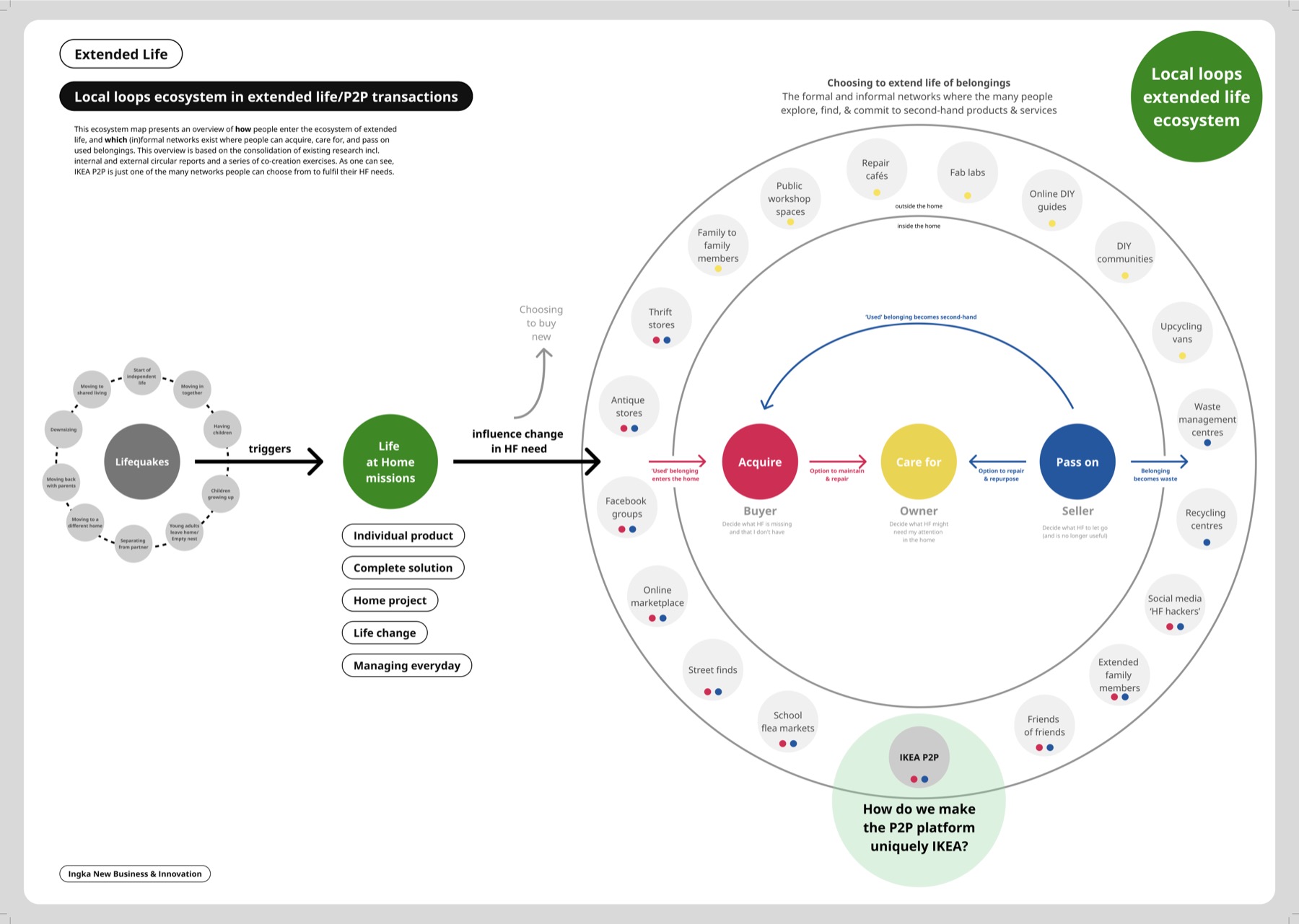
The local loops ecosystem. How people acquire, care for and pass on belongings, and where IKEA fits among the many networks they already use.
Design Direction
A destination for customers to pass on, acquire, and care for their IKEA items.
With IKEA as just one node in the local-loops ecosystem, the question sharpened: how do we make our proposition differentiating enough that customers will consider switching to IKEA?
The direction anchored the marketplace in the acquire → care for → pass on loop, leveraging existing and emerging data & tech stack including IKEA's own assets, new product-recognition capabilities, the spare-parts system, and maintenance and care services, so that passing on and acquiring second-hand IKEA is easier, safer, and more rewarding here than anywhere else.
Alongside the experience, a business model exploration defined five candidate models, tested and validated them, and prioritized three, including rewarding sellers with store vouchers over cash to keep value circulating inside the IKEA ecosystem.
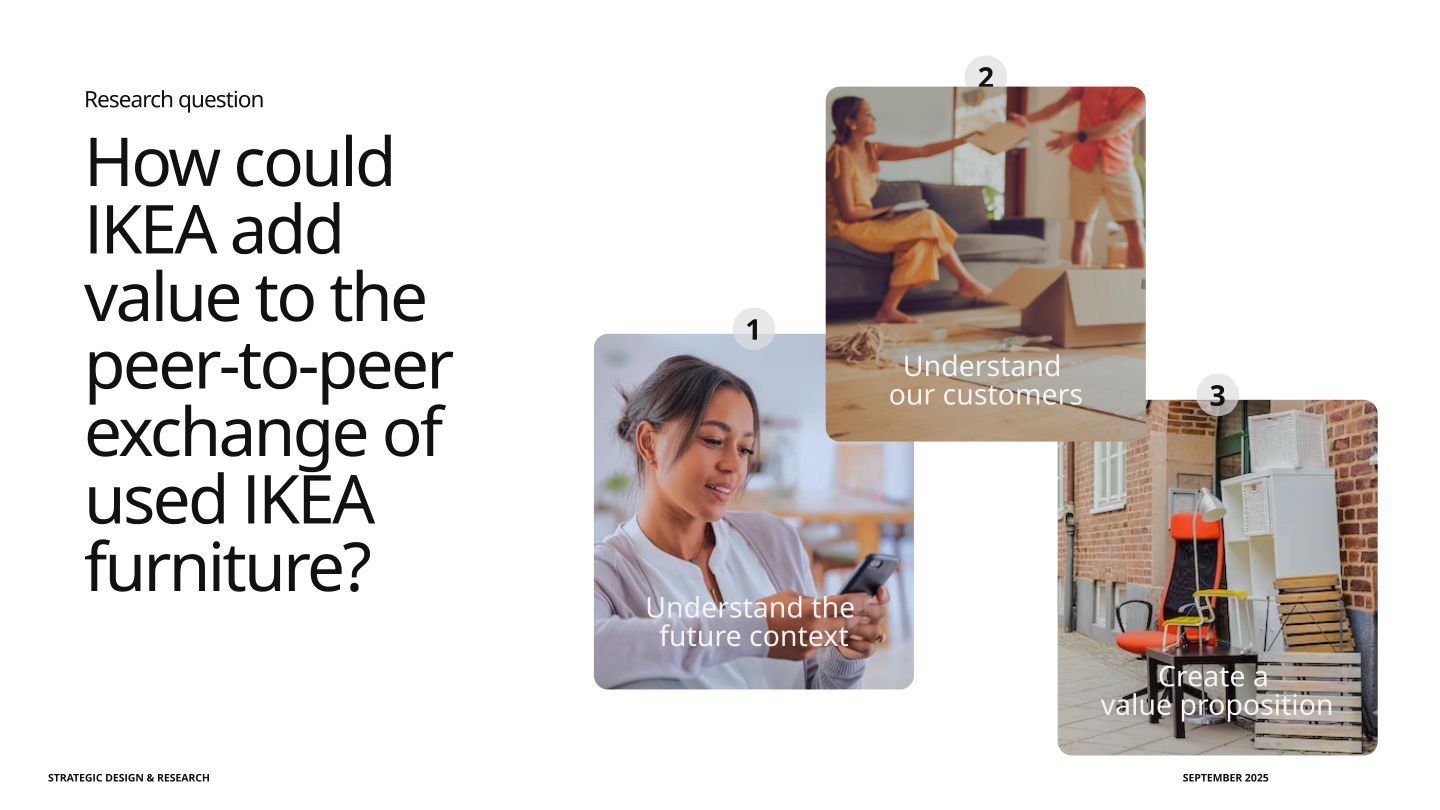
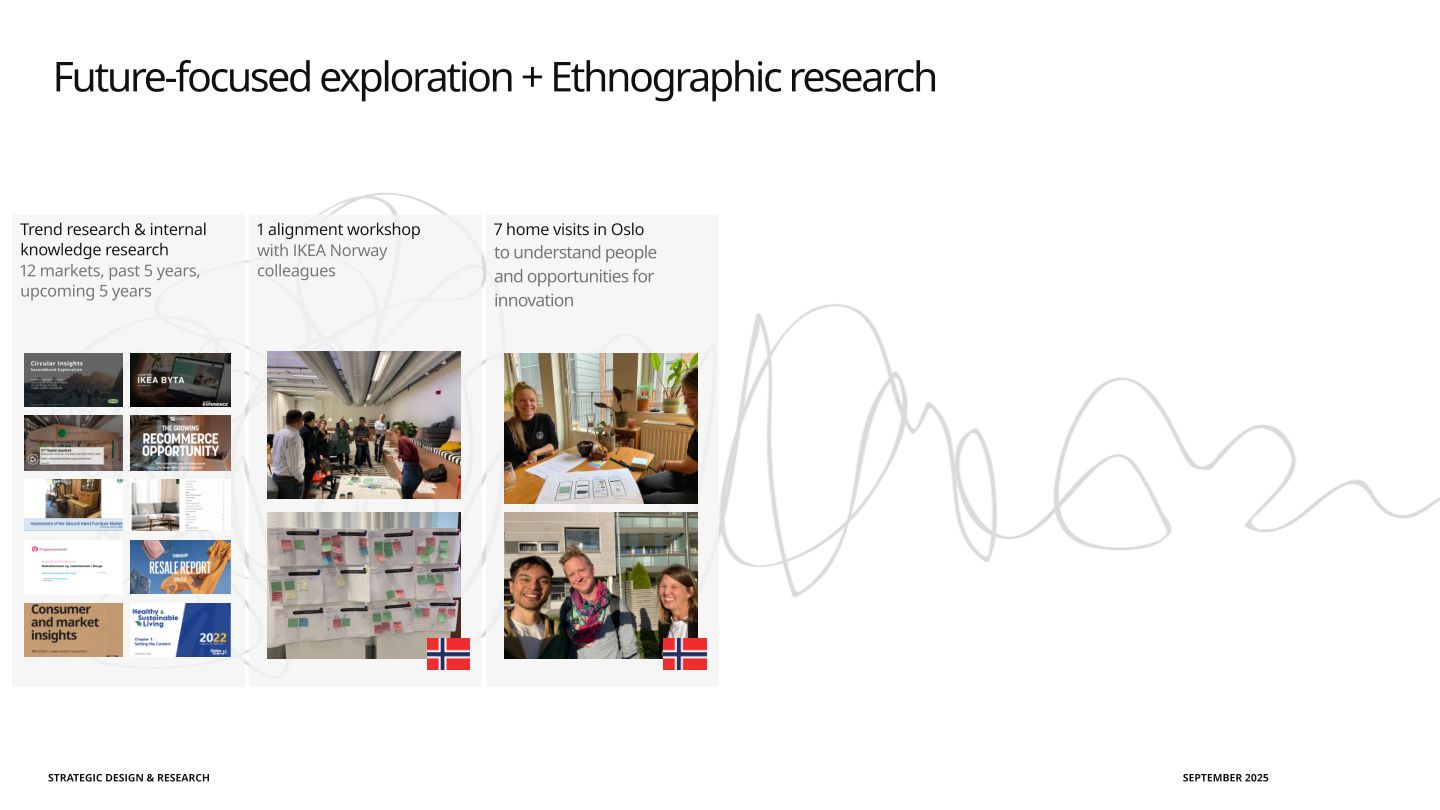
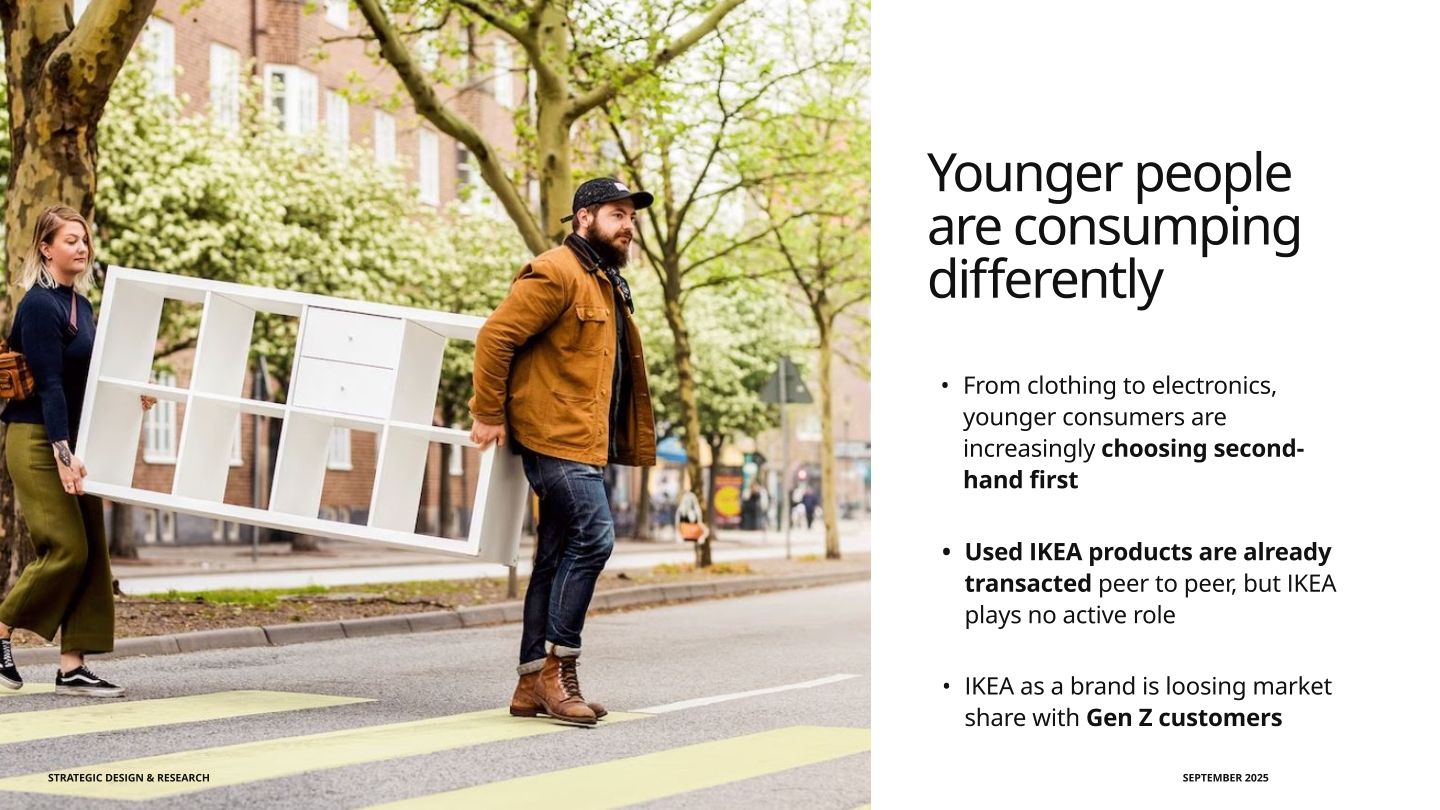
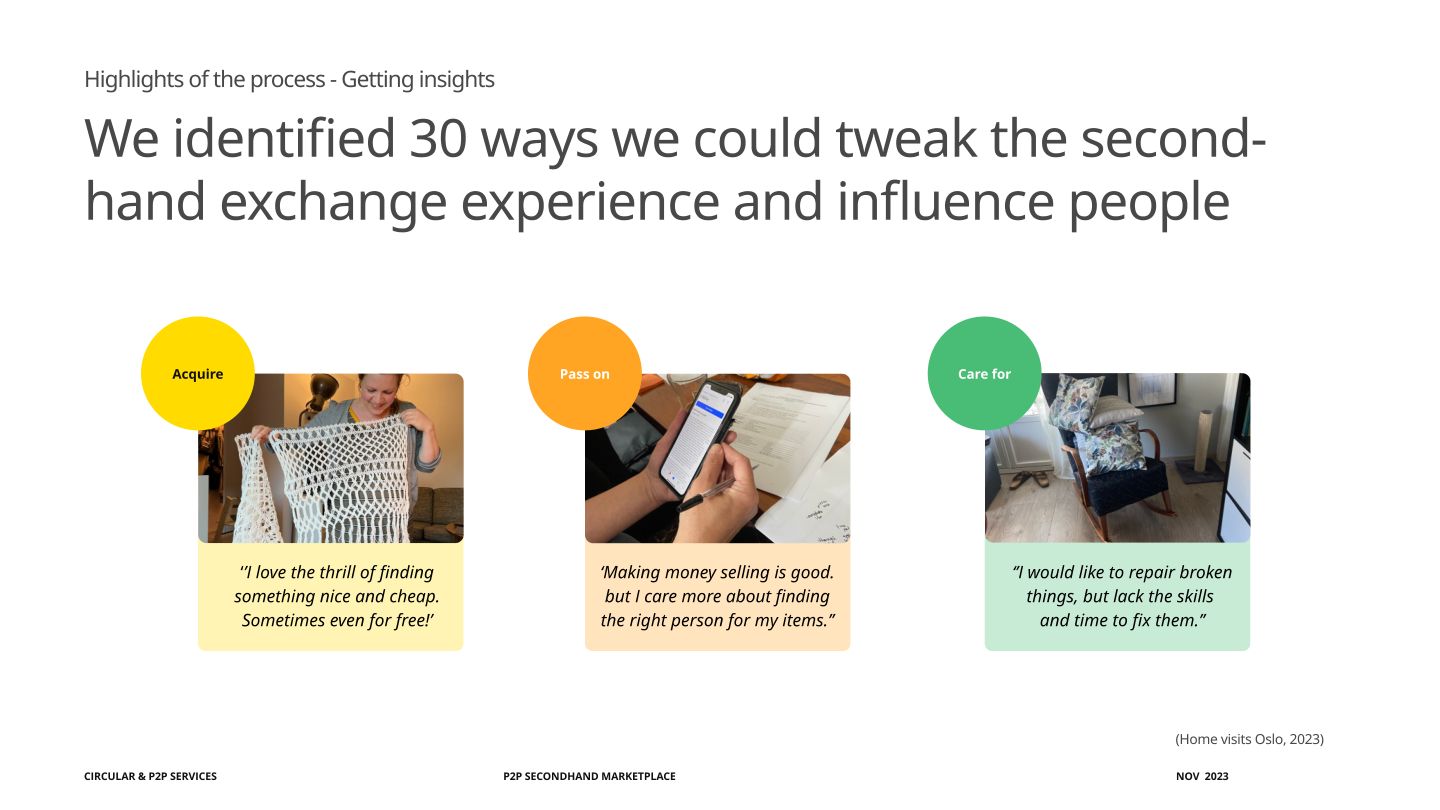
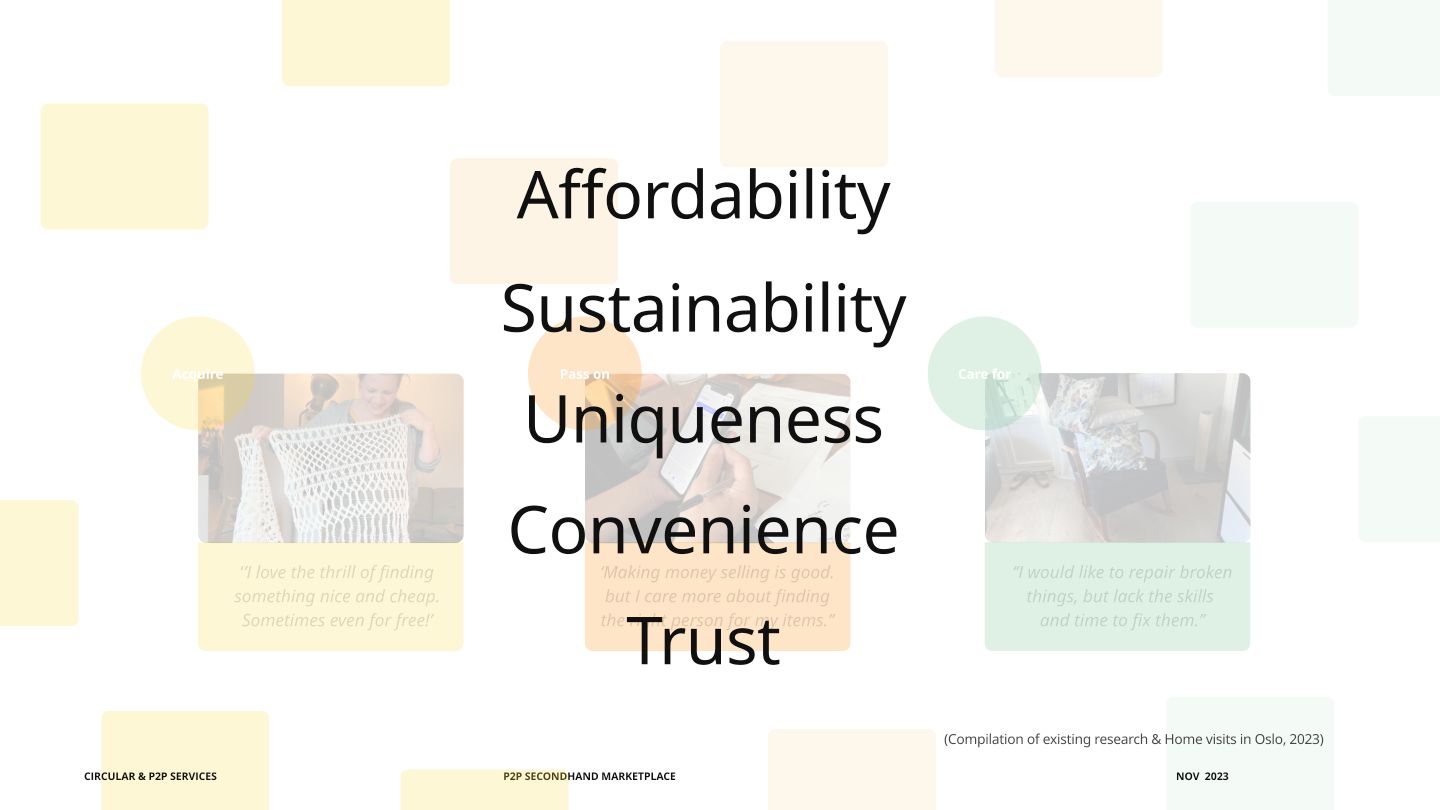
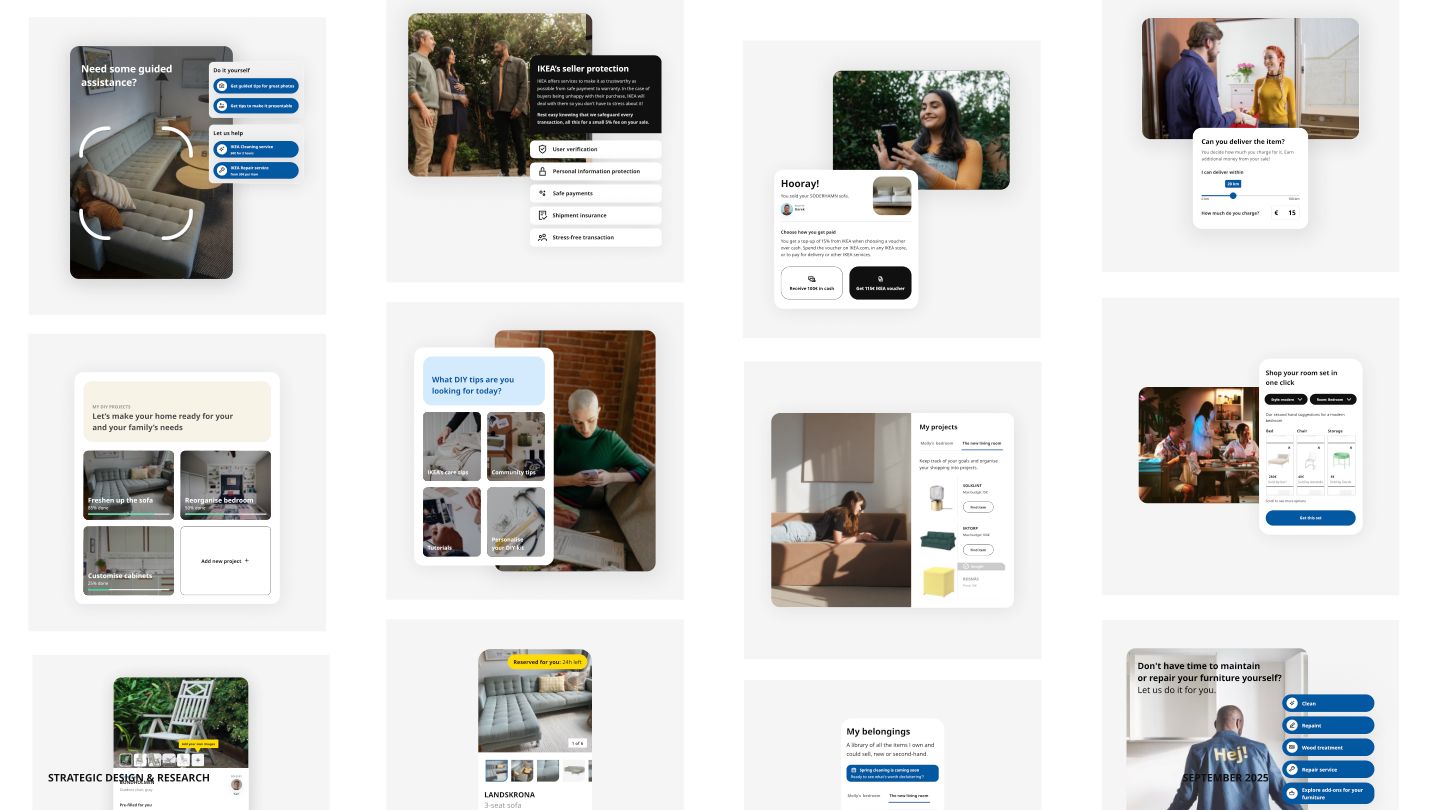
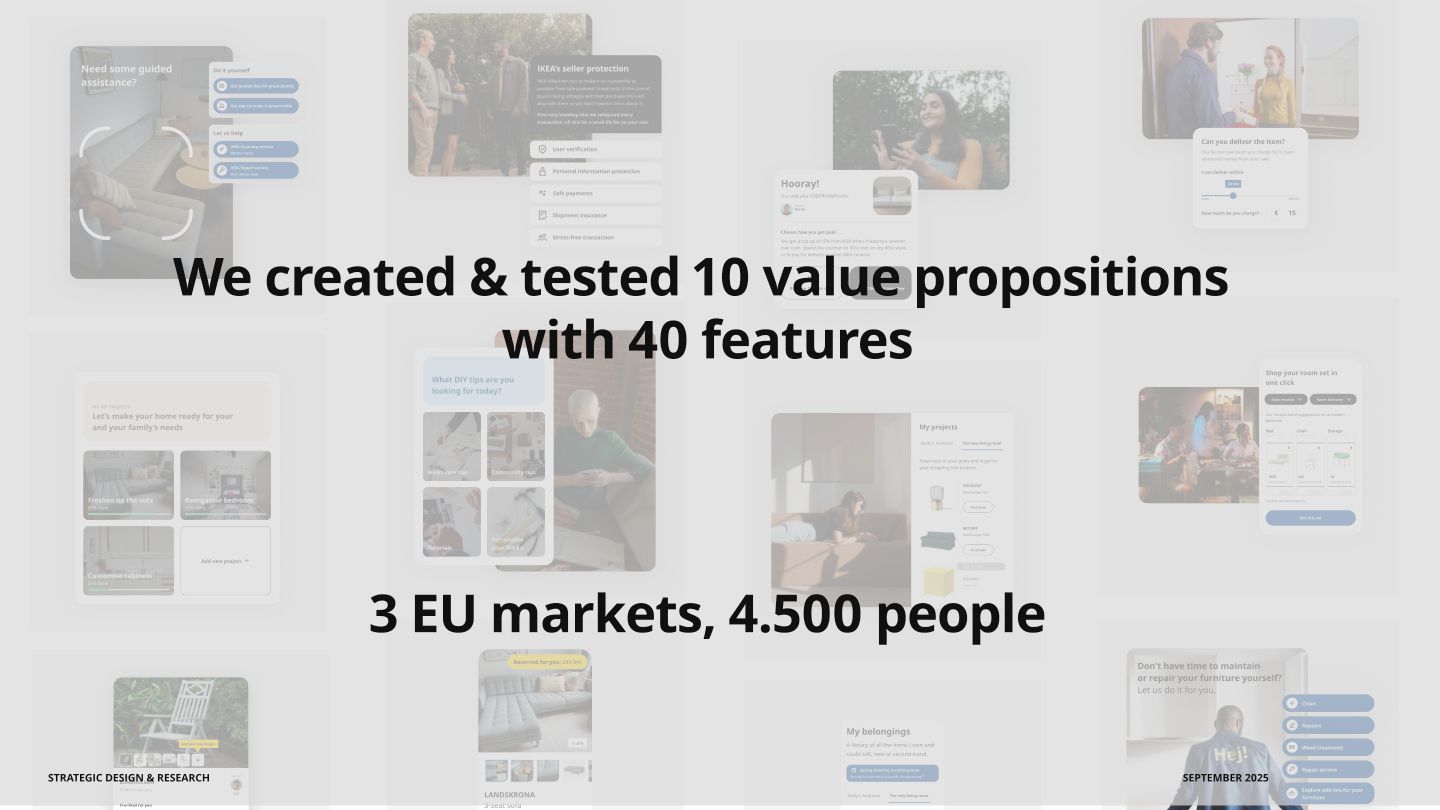
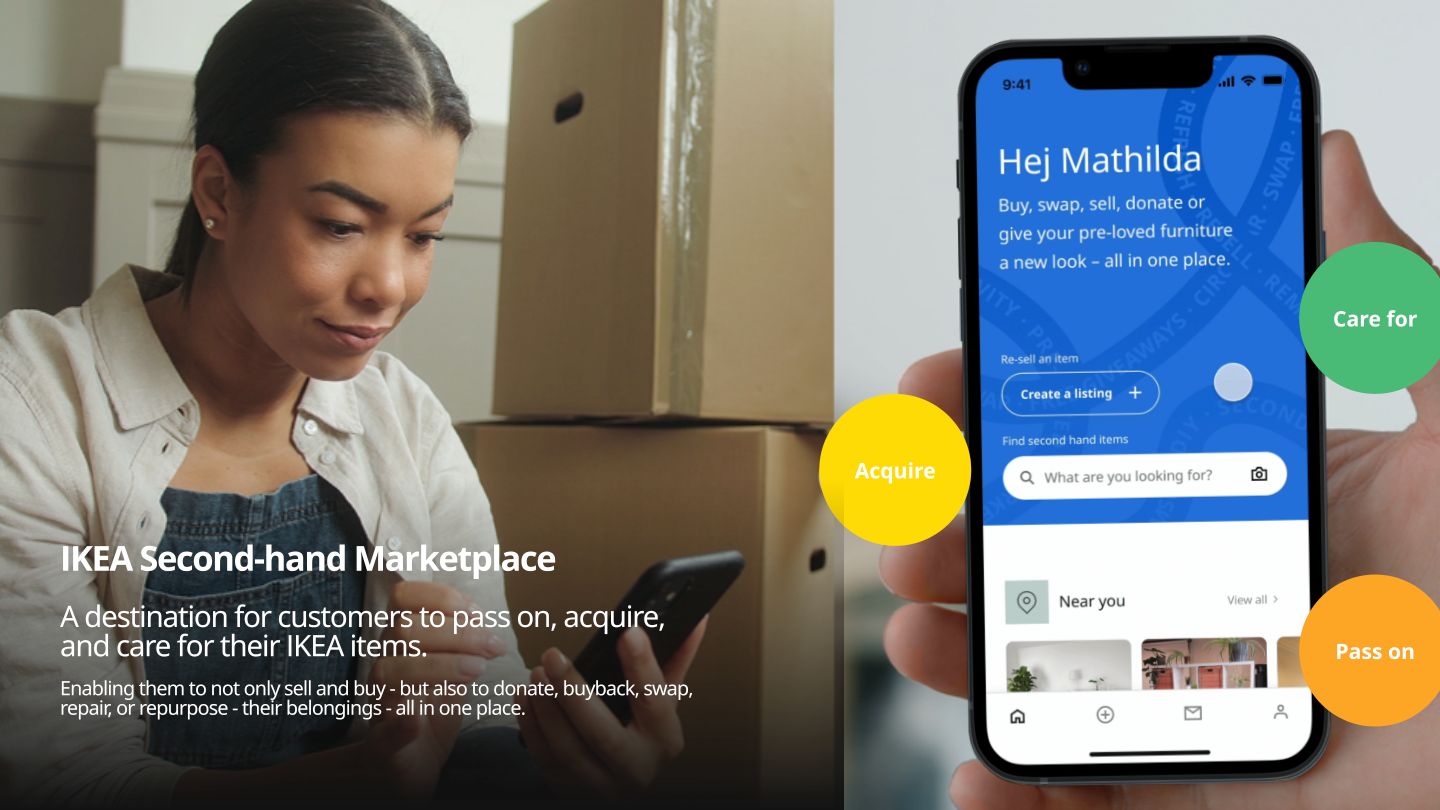
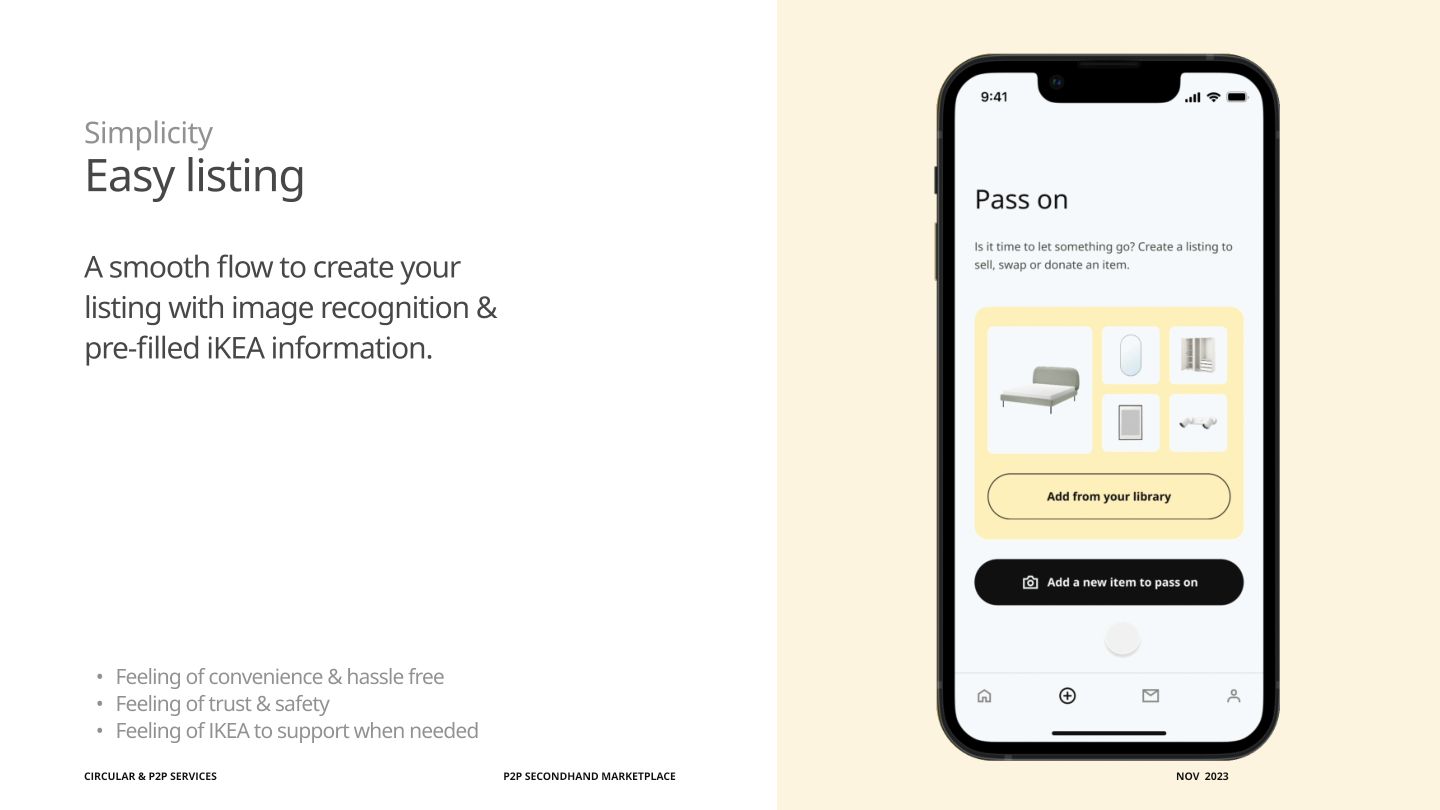
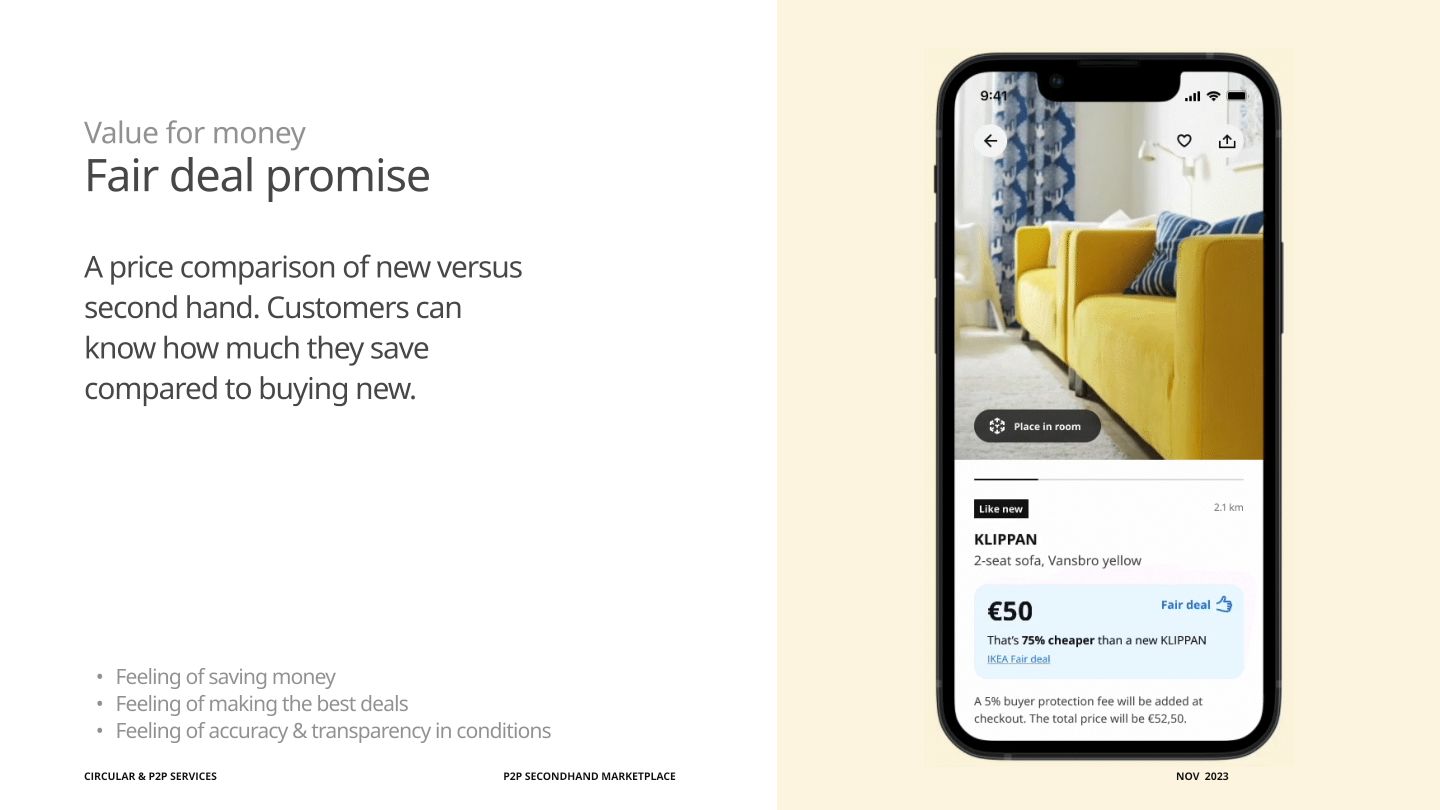
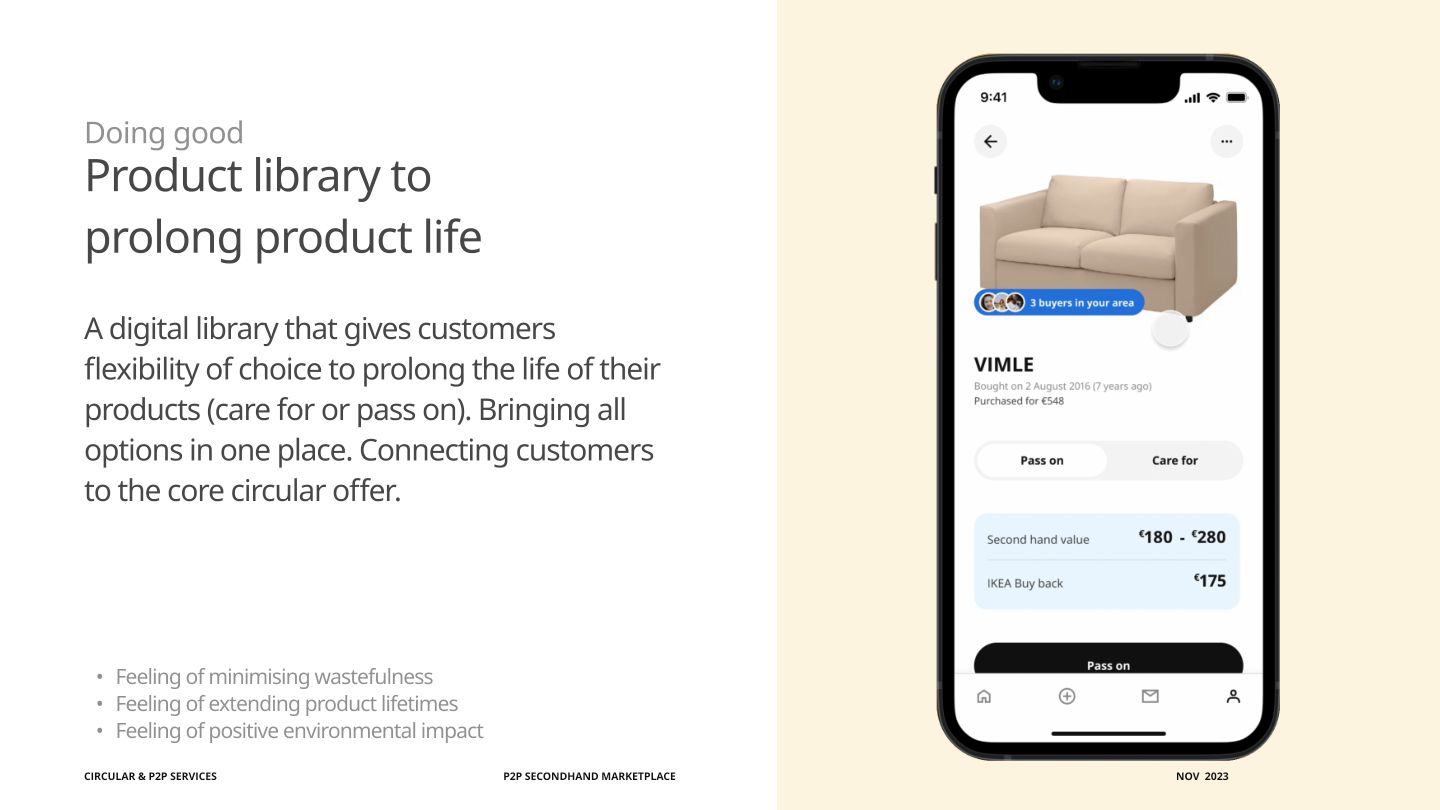
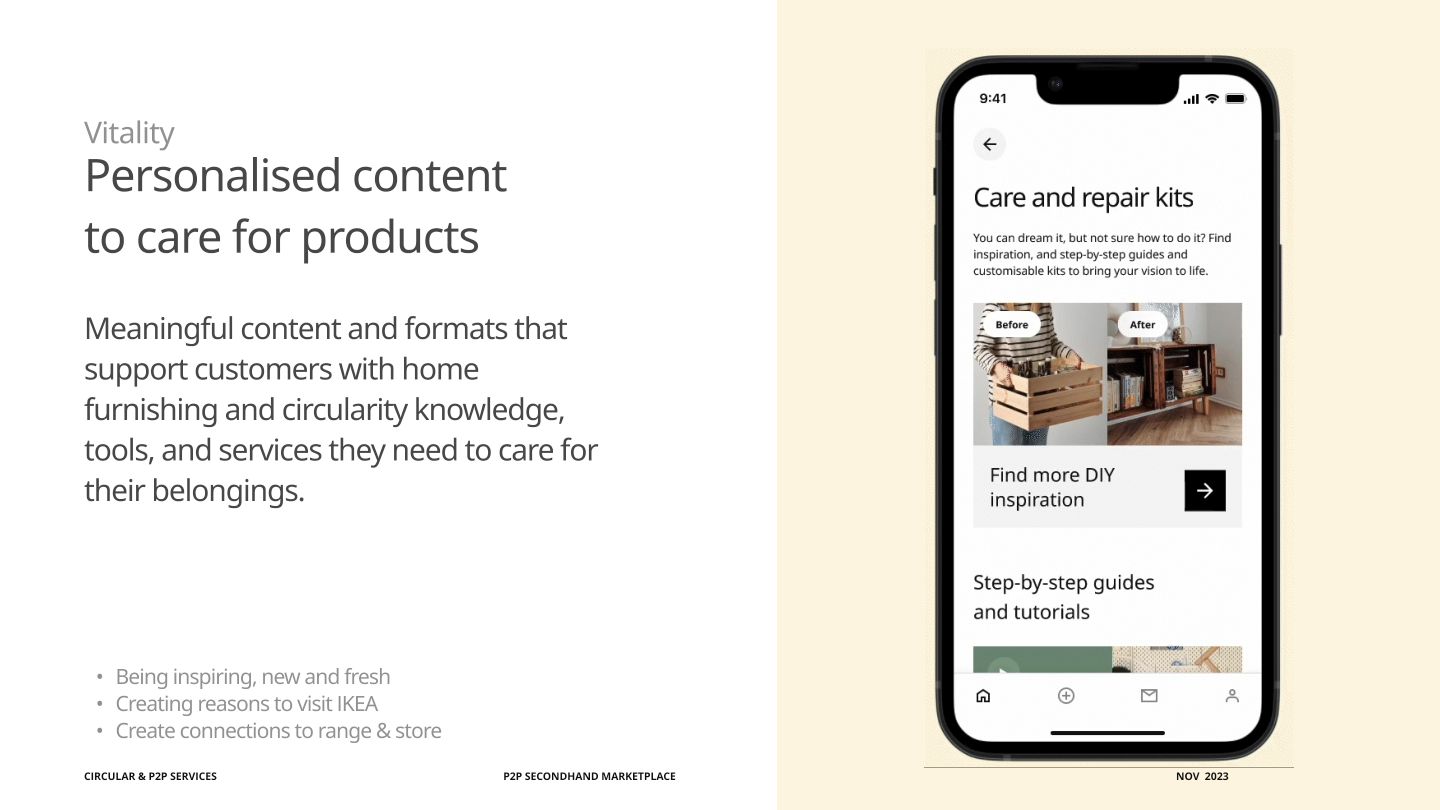
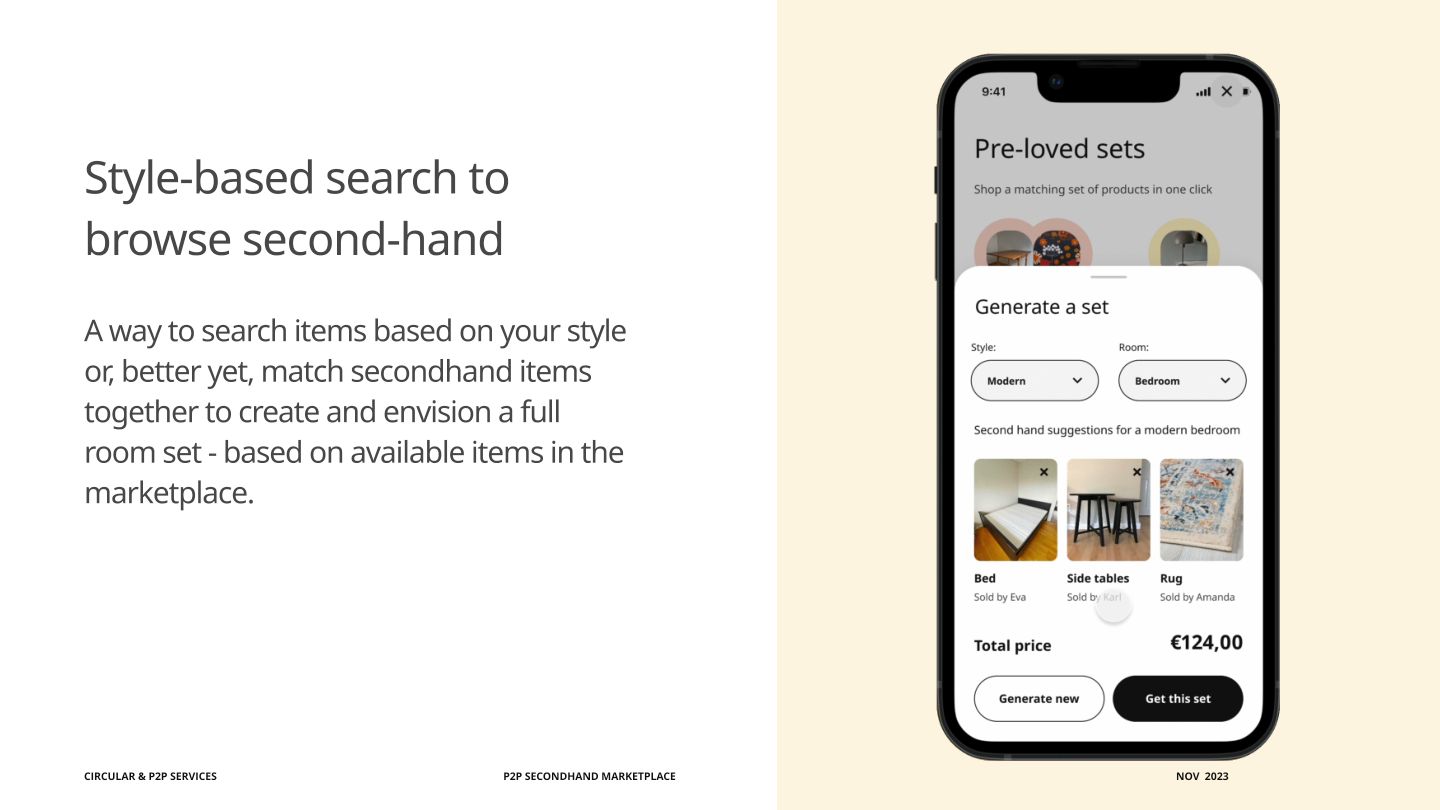
Design direction & concepts deck. The research question, approach, value proposition and business models. Step through with the arrows (17 slides).
Outcome
Live in six countries, and a Cannes Lions winner.
Delivered the IKEA Second-Hand Marketplace as a stand-alone web and app. I oversaw the pilot launches in Madrid and Oslo in mid-2024. The marketplace is now live in 6 countries.
Under my leadership, the team delivered the validated customer-facing experience design, business proposition, and revenue streams, as well as a prioritized feature roadmap and an MVP plan, with a capability assessment. In 2024, I participated in the handover to an internal digital team to build, and my role changed to strategic direction expert.
The project had large media coverage, including the Financial Times and Fast Company, and a Cannes Lions winner.
Reflection
Proving IKEA can still innovate in the circular domain, and grow share in peer-to-peer.
Working on circularity has been deeply rewarding: knowing the work would eventually contribute to a more sustainable lifestyle, and hopefully a cleaner planet. After 2.5 years in the Circular Innovation vertical, I learned to fully embed design in a rapidly moving business context, constantly challenging the status quo of "we already know the solution." Across the three business cases I was responsible for, Second-hand Marketplace, Digital Wallet and Rental, I supported area managers and the C-suite in deciding whether to move forward, postpone or cancel each exploration, based on the evidence we collected.
For the Second-hand Marketplace, the reframe in design direction, from "another marketplace" to "a second-hand destination that is uniquely IKEA," helped align the team around a common goal.
It also set the direction for the wider circular portfolio (Digital Wallet, Rental and maintenance services), and showed how design, in combination with strategy and business, can de-risk a board-level bet before a line of production code is written.