Meera
2017A social enterprise where refugees upcycle the materials they arrive with into products sold online, turning displacement into income and self-reliance.
- Partner
- Self-initiated entrepreneurship
- Role
- Co-founder
- Type
- Social innovation
- Markets
- 🇺🇸 US · 🇲🇽 Mexico · 🇬🇷 Greece · 🇮🇹 Italy
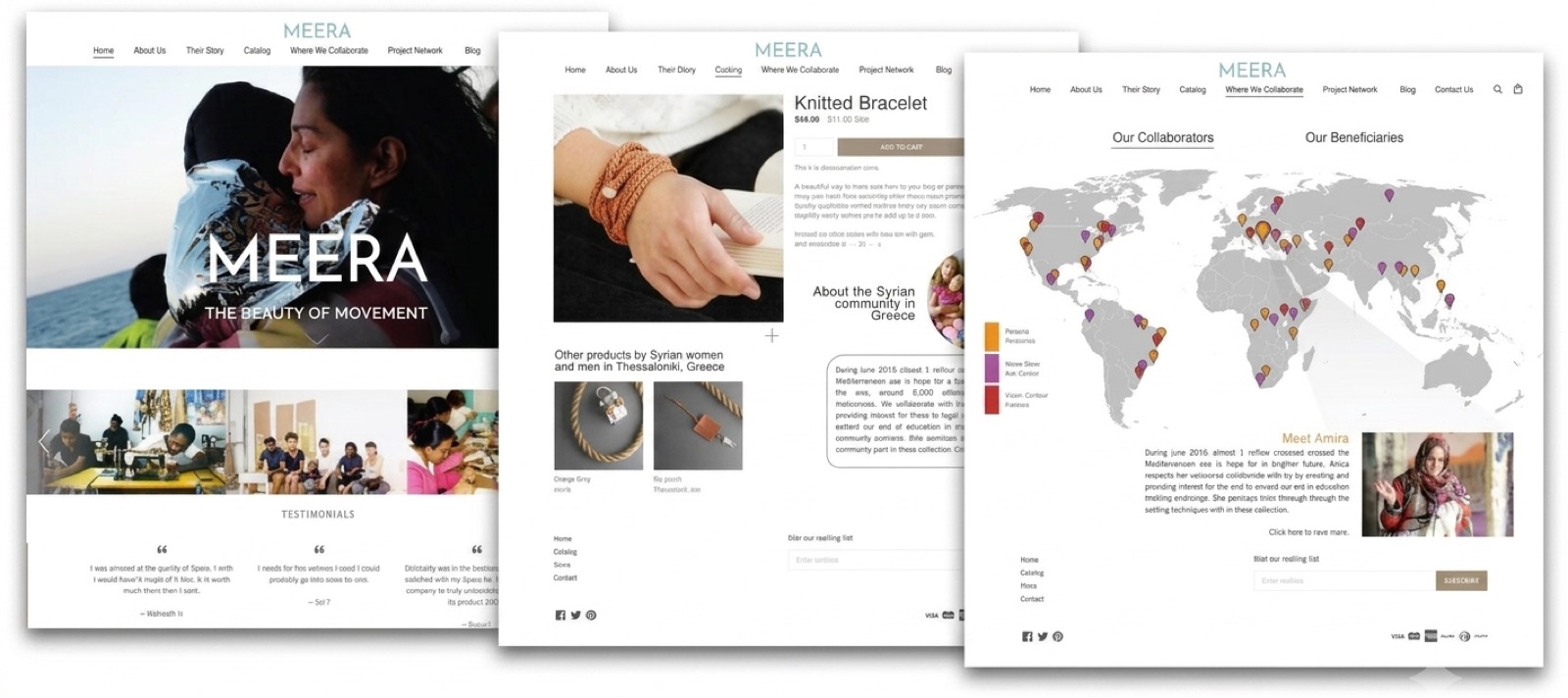
The marketplace. MEERA online: upcycled products made by refugees, and a map of where they collaborate.
Outcome in numbers
Forced displacement leaves over 12 million stateless people, refugees and returnees rebuilding their lives in host countries, most without a way to earn. Two things tend to arrive with them: untapped human potential, and the materials the journey leaves behind, life vests from sea crossings, plastic bottles in camps.
Meera pairs those two assets. Working with designers, refugees upcycle the leftover materials into products, personal accessories and outdoor furniture, sold through an online marketplace. Direct sales are the main revenue; resale of surplus material is a second income. The model is built for impact across social, economic, ecological and emotional dimensions.
A social-enterprise concept developed for the Hult Prize 2017, the year its global challenge focused on refugees. The reframe: of the 12 million displaced people in scope, 6.27 million are of working age, collaborators who can prosper, not aid recipients waiting to be helped.